
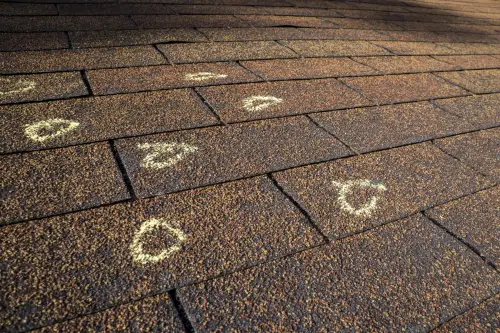
After a hailstorm, most homeowners do the same thing: walk out to the driveway, look up at the roof, see nothing obviously wrong, and go back inside. That's understandable — and it's exactly why so much hail damage in northern Illinois goes unreported until it turns into a leak a year or two later.
Hail damage is rarely dramatic from the ground. Shingles don't fall off. Siding doesn't shatter. What hail leaves behind is usually subtle: bruised shingles, dimpled metal, hairline cracks, and granules washing down the gutters. This guide walks through the signs you can check safely yourself, the ones that only show up on the roof, and how to tell hail damage apart from normal aging. If you'd rather have a trained eye look at it, our storm damage team offers free inspections with a written report.
Everything in the first half of this guide can be checked from the ground, a window, or your attic. Hail-damaged shingles can be slick and unstable, and a fall is far more costly than any roof repair. Use binoculars or your phone's zoom, and leave the roof itself to a professional.
Why Hail Damage Is So Easy to Miss
There are three reasons hail damage hides in plain sight.
You can't see the roof surface from the ground. On most homes, you're looking at the roof from a steep angle and a long distance. A shingle bruise the size of a quarter is invisible from the lawn, even on a roof that's taken hundreds of hits.
The damage is often underneath the surface. When hail strikes an asphalt shingle, it can crack the fiberglass mat inside the shingle without breaking the top layer. The shingle looks intact. It isn't. Over the following months, granules loosen around the impact point and the exposed asphalt starts breaking down in the sun.
Damage gets worse slowly. A northern Illinois roof goes through dozens of freeze-thaw cycles every winter. Water works into a cracked shingle, freezes, expands, and widens the crack. A roof that didn't leak the week after the storm may start leaking the following spring — long after most homeowners have connected it to the hail.
Start With the Soft Metals
If you only check one thing after a storm, check the soft metals around your home. Aluminum and thin steel dent easily and hold the mark, which makes them the most reliable ground-level evidence that hail actually hit your property — and a good indicator of how large it was.
- Gutters and downspouts. Look along the face of the gutters and down the length of each downspout for round dimples. Shine a flashlight across the surface at a low angle — dents that are invisible straight-on show up clearly as shadows.
- AC condenser. Check the thin metal fins on the sides of the unit. Hail flattens them in small patches. The top cover can show dents as well.
- Roof vents and caps. From the ground or a second-story window, look at box vents, turbine vents, and furnace or water heater caps. Dents there mean the roof took the same hits.
- Window wraps and trim. Aluminum trim wrapped around windows and doors dents easily and is right at eye level.
- Mailboxes, light fixtures, and grills. Anything metal that sat out in the storm is a useful witness.
Photograph what you find with a coin or tape measure for scale. If your soft metals show consistent dimpling, it's very likely your roof was struck too — even if it looks fine from the yard.
Check Your Siding, Windows, and Screens
Hail usually arrives with wind, which means it hits one or two sides of your house much harder than the others. Walk every side, but spend the most time on the elevations that faced the storm.
Vinyl siding. Look for small cracks, chips, or punctures, especially near the bottom edge of each panel where the siding is least supported. Cold vinyl is more brittle, so storms in spring and fall can crack siding that would only dent in July. Cracks often show up as fine lines radiating from a central point.
Aluminum and steel siding. Look for dents rather than cracks. As with gutters, a low-angle flashlight or late-afternoon sun makes them much easier to see.
Spatter marks. Hail knocks dirt, oxidation, and algae off surfaces, leaving clean round spots on siding, fences, sheds, and even the driveway. Spatter marks fade within days or weeks, so photograph them early. They're a good map of where the hail hit hardest.
Windows and screens. Check for torn or punctured screens, cracked or chipped glass, and dents or splits in vinyl or aluminum window frames. Screens are easy to overlook and are often the first thing damaged.
Painted wood. Decks, fences, and wood trim can show fresh chips or dings in the paint.
Siding damage is covered in more detail on our siding services page — and it matters, because siding hits are something insurance adjusters frequently miss.
Look for Granules in the Gutters
Asphalt shingles are coated with ceramic granules that protect the asphalt from UV light. Hail knocks those granules loose. After a storm, check:
- Inside the gutters (from a stable ladder at the gutter line only — not on the roof)
- At the bottom of each downspout, where water washes granules out onto the ground or splash block
- On patios, walkways, and window wells below the roof edge
Some granule loss is normal on any asphalt roof, especially a new roof in its first year or an old roof near the end of its life. What you're looking for is a noticeable change: a heavy layer of granules right after a storm, or piles at the downspout outlets that weren't there before.
If your home hasn't been through a storm recently, take a few minutes this week to photograph your gutters, downspouts, siding, and roof from the ground. Date-stamped "before" photos make it much easier to show what changed after the next hailstorm.
Signs Inside Your Home
Some of the best evidence of roof damage is inside the house, and you can check it safely.
Ceilings and upper walls. Look for new water stains, bubbling paint, or discoloration, especially on top-floor ceilings, around light fixtures, near exterior walls, and around skylights and chimneys.
The attic. If your attic is accessible and safe to walk, bring a flashlight. Look at the underside of the roof deck for dark spots, damp or compressed insulation, water trails running down rafters, and rusty nail tips. On a bright day, check for pinpoints of daylight coming through. If you have a finished attic or the access isn't safe, skip this step.
After the next heavy rain. Hail damage often doesn't leak immediately. Recheck your ceilings and attic after the next big rain, and again after the first real thaw of winter.
Damage That Only Shows Up on the Roof
Some hail damage can only be confirmed by someone standing on the roof. This is where a professional inspection matters, and it's worth knowing what a good inspector is looking for:
- Bruises or soft spots. Hail impacts can leave a spot on the shingle that feels soft or spongy under light pressure, like a bruise on an apple.
- Exposed mat. Round or irregular spots where granules are gone and the black asphalt or fiberglass mat underneath shows through.
- Fractured shingles. Cracks through the shingle, sometimes only visible when the shingle is gently lifted.
- Cracked ridge caps and hip shingles. These are bent over the peak of the roof, which makes them more vulnerable to cracking on impact.
- Damaged pipe boots and flashing. Rubber pipe boots can split and metal flashing can dent, both of which create leak points.
- Broken shingle seals. Wind driving hail can lift shingles and break the adhesive strip that holds them down, leaving them prone to blowing off in the next storm.
Insurance adjusters use a specific method to decide whether roof damage meets their threshold. We cover that process in detail in our guide to what insurance adjusters look for on your roof.
Hail Damage vs. Normal Wear and Tear
Not every mark on a roof is hail damage — and an honest inspection should tell you so. Insurance covers sudden storm damage, not age. Here's how the two tend to differ:
- Pattern. Hail hits are random and scattered across a slope, and usually heavier on the side that faced the storm. Wear tends to be uniform across the roof or concentrated where the sun is strongest.
- Blistering. Blisters are raised bubbles that pop and leave small craters. They're a manufacturing or ventilation issue, not hail, and they often look similar to an untrained eye.
- Age cracking and curling. Thin cracks across many shingles, curled edges, and cupping are signs of an aging roof — not a single storm.
- Mechanical damage. Scuffs from foot traffic, tree limbs rubbing, or previous repairs look different from impact marks and are usually in predictable places.
- Matching evidence. Real hail damage on the roof almost always comes with matching evidence on soft metals, siding, or screens. If the gutters and AC unit are untouched, be skeptical of anyone claiming the roof is full of hail hits.
If you're unsure whether your roof is simply getting old, our checklist of signs your roof needs replacing covers the age-related warning signs in detail.
What to Do If You Find Signs of Hail Damage
- Photograph everything. Wide shots of each side of the house, then close-ups with a coin or tape measure for scale. Note the date of the storm.
- Don't make repairs beyond stopping active leaks. Tarping a leak or boarding a broken window is fine and expected. Replacing damaged materials before an inspection can make the damage harder to document.
- Get a professional inspection before you call your insurer. An inspection tells you whether the damage is real, whether it's likely to exceed your deductible, and whether a claim makes sense. Our insurance claim guide explains why the order matters.
- Don't wait too long. Your policy sets a deadline for reporting damage, and evidence like spatter marks fades. The sooner the damage is documented, the easier it is to tie to a specific storm.
- Be careful who you let on your roof. Hail events bring out-of-town contractors knocking on doors. Read our guide on how to avoid storm chasers before you sign anything.
How We Help
When you call Littlefield Siding after a storm, we inspect the entire exterior — roof, siding, windows, gutters, soffit, and fascia — not just the roof. We get on the roof, photograph every area of damage, and put it all in a written report you can keep, whether or not you hire us.
Just as important, we'll tell you when we don't find storm damage. If what you're seeing is normal wear, we'll say so. If the damage is real but minor, we'll help you think through whether a claim is worth it. We never document damage that isn't there, and we never pressure a claim.
If you do have a claim, we meet your adjuster on-site, walk them through our documentation, and prepare a supplement if the estimate leaves damage out. The same local crew that inspects your home does the repair work.
Get a Free Hail Damage Inspection
If a storm has passed through your neighborhood and you've spotted any of the signs above — or you just want to know for sure — request a free inspection or call us at (815) 636-6446.
We've been on Riverside Blvd since 1986 and inspect homes throughout Loves Park, Rockford, Machesney Park, Roscoe, Belvidere, and communities across northern Illinois.