
Opening a letter that says your roof claim was denied is frustrating — especially when you watched the hail come down and your gutters are covered in fresh dents. But a denial isn't always the final word. Some denials rest on incomplete information or a disagreement about cause. Others are correct, and knowing that early saves you months of effort.
This guide covers why roof claims get denied, what to do first, and the options northern Illinois homeowners have for pushing back — along with an honest look at when accepting the decision makes more sense. It builds on our storm damage repair services and assumes you've already filed a claim. If you haven't yet, start with our insurance claim process guide.
We're roofing and exterior contractors, not attorneys. This guide explains the process in general terms — for advice about your specific policy or dispute, talk to a licensed professional.
Why Roof Claims Get Denied
Your denial letter should tell you the reason. Most fall into these categories.
Wear and Tear or Roof Age
Homeowner policies generally cover sudden damage from events like hail and wind — not gradual deterioration. If the adjuster concludes that granule loss, cracking, or curling came from age rather than the storm, the claim may be denied. On older roofs, this is often where the line between storm damage and wear gets argued most.
"Pre-Existing" Damage
The insurer may say the damage was already there before the storm you reported — from an earlier storm, for example. This comes up when a claim is filed long after the event, or when a previous claim was paid but the roof was never repaired.
Cosmetic Damage Exclusions
Some policies exclude damage that affects appearance but not function — dents in metal roofing, gutters, or trim that don't let water in. If your policy has this kind of exclusion or endorsement, a roof can be visibly hit and still not qualify for payment.
Damage Below the Deductible
Technically this isn't always a denial. The insurer may agree there's covered damage, but if the estimate comes in under your deductible, nothing gets paid. If your policy has a percentage-based wind and hail deductible, check how large that deductible actually is — it may be bigger than you think.
Late Reporting
Policies typically require "prompt" notice of a loss. When a claim is reported long after a storm, the insurer may argue it can't tell which event caused the damage, or that the delay allowed the damage to get worse.
Improper Installation
If the adjuster finds high nailing, missing flashing, or other installation defects, they may attribute the failure to how the roof was put on rather than to the storm.
Lack of Documentation
If the adjuster couldn't confirm storm damage — or the file doesn't show when and where the damage happened — the claim can be denied for insufficient evidence.
Partial Denial vs. Full Denial
A full denial means nothing is being paid. A partial denial approves some items — say, gutters and one roof slope — while denying the rest. The two call for different responses, which we'll cover below.
First Steps After a Denial
Before you do anything else, slow down and get organized.
- Get the denial in writing. If you were told over the phone, ask for a written denial letter. You need the exact reason, not a summary.
- Find the policy language they cited. The letter should point to a specific provision or exclusion. Get a complete copy of your policy, including all endorsements, from your agent or insurer, and read that section yourself.
- Don't argue on the phone. Keep important communication in writing, and after any call, note the date, the person's name, and what was said.
- Request the adjuster's report and photos. Ask for the adjuster's inspection report, photos, and estimate. You can't respond to findings you haven't seen.
- Keep protecting the home. If the roof is leaking, keep it tarped. Document everything before any permanent repair so the original condition is preserved.
Get an Independent Inspection
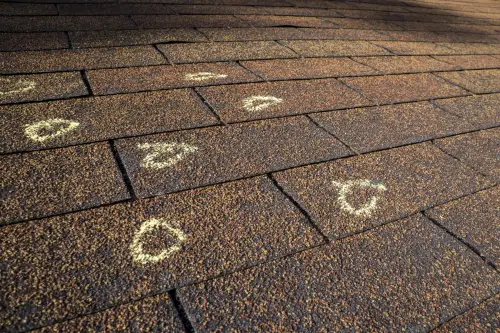
Once you have the adjuster's findings, get a second set of eyes on the roof from a contractor who does storm damage documentation. The goal is a point-by-point comparison: what the adjuster recorded, what the independent inspection found, and where the two disagree.
A useful report includes photos of documented impacts with location reference, soft metal damage, and a clear distinction between storm damage and age-related wear. If the denial was based on wear and tear, the report needs to address that directly. Our guide to what adjusters look for explains those patterns in detail.
Be ready for either outcome — a second inspection may find damage the adjuster missed, or confirm the adjuster was right.
Request a Re-Inspection With Your Contractor Present
If the independent inspection supports your claim, ask your insurer in writing to re-inspect the roof. Reference your claim number, point to the specific findings you disagree with, and include the new documentation. You can also ask whether a different adjuster can be assigned.
When the re-inspection is scheduled, have your contractor there to point out each documented impact and discuss disagreements on the spot, rather than trading paperwork afterward.
Partial Approvals and Supplements
If your claim was partially approved, you're usually not looking at a denial problem — you're looking at a scope problem. Missed slopes, code-required items, and secondary damage can often be addressed through a supplement: a documented request asking the insurer to add items to the approved estimate.
We cover how supplements work in our insurance claim process guide, so we won't repeat it here. The key point: a partial approval is a starting place, not necessarily the final number.
The Appraisal Clause
Many homeowner policies include an appraisal clause, a process for resolving disagreements over the amount of a loss without going to court. The details vary, so read the appraisal section of your own policy. In general, it works like this:
- You or the insurer makes a written demand for appraisal.
- Each side selects its own appraiser.
- The two appraisers select a neutral umpire.
- The appraisers try to agree on the amount of the loss. Where they can't, they submit their differences to the umpire, and an amount agreed to by any two of the three typically decides it.
Appraisal is built for "we agree it's covered, but we disagree on what it's worth." If your insurer says the damage isn't covered at all — wear and tear, an exclusion, late notice — appraisal generally isn't the tool for that dispute. Check how your policy describes the process and what each side pays for before you invoke it.
File a Complaint With the Illinois Department of Insurance
The Illinois Department of Insurance regulates insurers doing business in the state, and homeowners can file a complaint about how a claim was handled. Complaints can be filed through the Department's website.
Have your claim number, denial letter, a timeline of your communication with the insurer, and your supporting documentation ready. A complaint doesn't guarantee a different outcome, but it puts the way your claim was handled on record with the state regulator.
When a Public Adjuster or Attorney Makes Sense
Most roof disputes don't require outside help. Some do.
A public adjuster works for you rather than the insurer and is typically paid from the claim settlement. That can make sense on a large or complicated loss — roof, siding, and interior water damage together, for example — or when you and the insurer are far apart on the amount. Ask exactly how they're paid and get the agreement in writing before you sign.
An attorney is worth talking to when the dispute is about coverage itself, when a deadline is getting close, when the amount at stake is significant, or when you believe the insurer isn't handling the claim fairly. An attorney can read your specific policy language and tell you what your real options are.
Watch Your Deadlines
Filing deadlines are set by your individual policy — there isn't one universal Illinois deadline for storm damage claims. Policies typically require "prompt" notice of a loss, and many set a one-year or two-year limit from the date of loss for claims or lawsuits.
Under Illinois law (215 ILCS 5/143.1), the policy's suit-limitation period is paused from when proof of loss is filed until the insurer denies the claim. That means once you receive a denial, the clock can start running again. Check your policy's deadlines now and act early.
When the Denial Is Probably Right
Not every denial is a mistake, and chasing one that's correct costs you time and stress. A denial is likely correct when:
- The roof is at the end of its life. Asphalt shingles generally last 20 to 30 years. A roof near or past that range with widespread granule loss and curling may simply be worn out. Our guide to the signs a roof needs replacing can help you tell the difference.
- The independent inspection agrees with the adjuster. If a second, independent look doesn't find storm damage either, that's a strong signal.
- The damage is real but small. A handful of damaged shingles below your deductible is often cheaper to fix directly than to fight over.
- The cause is something other than the storm. Ventilation problems, old flashing, or past installation shortcuts aren't storm damage, even if they showed up after a storm.
In those cases, the smarter path is usually a self-paid repair, a planned replacement on your own timeline, or — for borderline damage that isn't leaking — monitoring the roof and re-checking after the next season.
Frequently Asked Questions
Can I appeal a denied roof claim in Illinois?
There isn't one appeal form that applies to every insurer, but a denial usually isn't the end of the road. You can ask for a re-inspection with new documentation, submit a written response to the specific policy language the insurer cited, use your policy's appraisal clause if the dispute is about the amount, file a complaint with the Illinois Department of Insurance, or talk to a public adjuster or attorney.
How long do I have to dispute a denied roof claim?
It depends on your policy. There's no single Illinois deadline — the policy sets it. Many policies set a one-year or two-year limit from the date of loss for claims or lawsuits. Under 215 ILCS 5/143.1, the policy's suit-limitation period is paused from when proof of loss is filed until the insurer denies the claim, so the clock can start running again once you receive a denial. Check your policy and act early.
Can I use the appraisal clause if my whole claim was denied?
Usually not by itself. Appraisal is designed to settle disagreements over the amount of a covered loss, not whether the loss is covered in the first place. If the insurer denied the claim because it says the damage is wear and tear or excluded, appraisal generally isn't the right tool for that dispute.
Is it worth getting a second inspection after a denial?
Yes, if you believe the adjuster missed storm damage. An independent inspection gives you a point-by-point comparison against the adjuster's findings. Sometimes it uncovers documented damage the adjuster didn't record. Sometimes it confirms the adjuster was right. Either way, you'll know where you stand before you spend more time on the claim.
Will Littlefield Siding tell me if the denial was correct?
Yes. Our storm damage inspections are free, come with a written report, and carry no obligation. We never encourage unwarranted claims. If what we find supports the adjuster's decision, we'll tell you, and we'll talk through repair options that make sense without insurance.
How We Help After a Denial
When you call us about a denied or partially denied claim, we start with an honest look at the roof. Our free storm damage inspection comes with a written report you can compare against the adjuster's findings.
If our documentation supports storm damage the adjuster didn't record, we can meet the adjuster on-site for a re-inspection and walk the roof together. If the claim was partially approved and the estimate is short, we prepare the supplement documentation for the missing items.
If what we find lines up with the denial, we'll say so. We never encourage fraudulent or unwarranted claims. Instead, we'll give you a free written estimate for a repair or replacement so you can decide what makes sense on your own terms.
Get a Second Opinion on Your Roof
If your claim was denied and something doesn't add up, the next step is the same either way: find out what's actually on your roof. Call us at (815) 636-6446 or request a free inspection online.
We're a family business based in Loves Park, in business since 1986, and we serve homeowners across Rockford, Machesney Park, Roscoe, Belvidere, Poplar Grove, and the rest of our 18 northern Illinois communities. Before your re-inspection, it's worth reading up on hidden hail damage signs so you know what to point out.